The iOS simulator that runs on Linux, built for agents.
Frostline runs real, unmodified iOS simulator apps inside an ARM64 Linux VM. An agent can launch them, tap, type, read the screen and run the tests, over a CLI and MCP.
$ uname -smLinux aarch64
Linux aarch6400:00.0
Wikipedia for iOS on an 8-core ARM Linux VM with no GPU, in real time. These are the commands that ran. Pick one to replay it.
iOS has been the one platform an agent could not just spin up.
On the web an agent starts a server, opens the page, looks, clicks, fixes and checks again. Now a real iOS app runs in a Linux VM the agent owns, so it can build, run, see, drive and test an iOS app in the same loop, many at once, on ordinary cloud machines.
We want every coding agent to ship and verify iOS work the way it already does for the web.
What that unlocks
An agent sees the app and drives it
The screen comes back as a tree in about 140 ms and a tap lands in about 170 ms. Here Lichess opens with the Ruy Lopez, one tap per square.
frostline tap 226 587e4
Launch, type, swipe, screenshot and record are single commands too.
The tests you already have run as written
Maestro flows run from their own YAML and XCUITest suites run too. This is CrowdVolt, our production React Native app, buying a ticket end to end against a test backend.
frostline flow buy.yaml
Wikipedia's own UI test suite passes 81 of 84.
Apps build on Linux too Experimental
Wire for iOS, 227 targets and 4,864 build tasks, builds on Linux, reaches its login screen and takes typing. It works for some real apps, not most yet.
flb build App.xcodeproj && flb run
You bring Apple's SDK, downloaded with your own Apple ID.
Real apps, unmodified
Every clip here is a capture from an ARM Linux VM, rendered in software. These four devices ran on one 8-core VM at the same moment.
3D works, slowly, in software
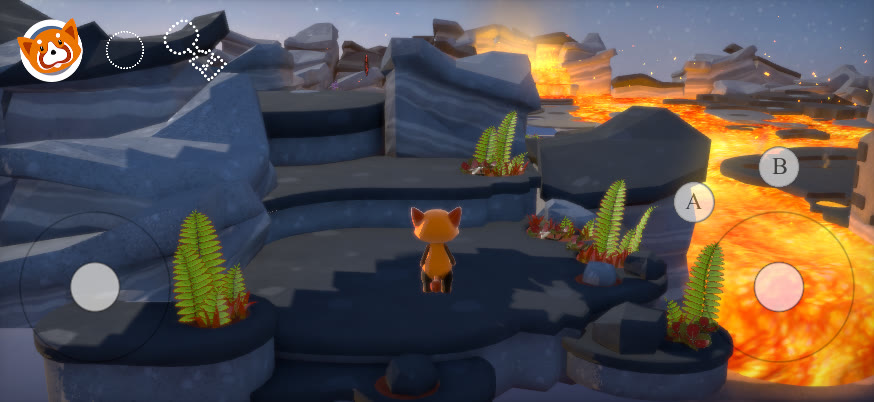
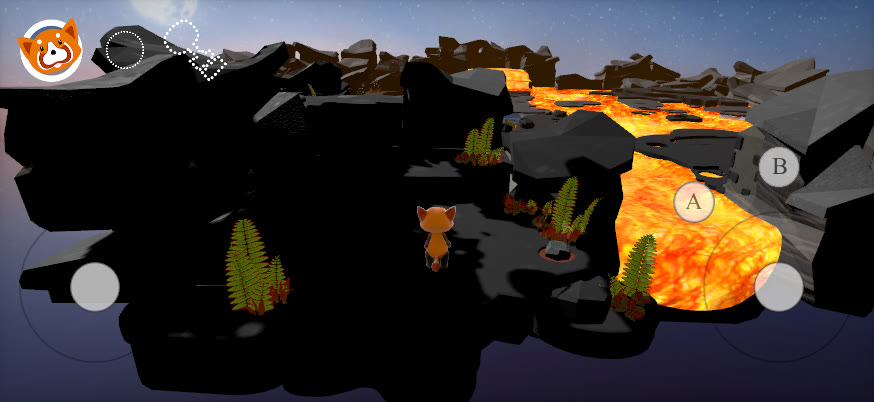
There is no GPU anywhere in this. Metal calls go through a Metal to Vulkan layer onto lavapipe, a software renderer. Apple's SceneKit and audio sample runs at 60 fps, SuperTuxKart at 33, Bevy at 21 and Fox 2 at 8.
BeforeAfter
Fox 2, Apple's SceneKit sample, before and after the shader work of November 16. Drag to compare.
Slowed capture
SuperTuxKart. Captured at one tenth speed so every frame lands, then played back at the game's own clock.
How it works
Six layers between Apple's runtime and your agent.
01
Apple's runtime
The installer downloads Apple's iOS 26.5 simulator runtime and seals it read-only.
iOS 26.5read-only
runs on
02
A Darling-based layer
The runtime's arm64 Mach-O binaries run natively on Linux. Same CPU architecture, no instruction emulation. A user-space kernel server answers Mach and BSD calls.
arm64 Mach-OMachBSD
draws through
03
Display host
Frostline composites the app's layers and presents frames. Metal goes through a Metal to Vulkan layer onto a software renderer.
MetalVulkanlavapipe
is driven by
04
Input and the screen tree
Touch, keyboard and hardware buttons are injected as HID events. Accessibility gives back the screen tree.
HID eventsaccessibility
is exposed as
05
The frostline CLI and MCP server
One command per action, for agents and for people.
About four on an 8-core VM. Each one is owned by a teammate or an agent.
about 4 per 8 cores
The app's own code runs unmodified at native speed. Frostline supplies what a Mac would: a kernel to talk to, a screen, input, and a way in. The compatibility layer is built on Darling, which is open source under the GPL.
Give an agent a device over MCP
claude mcp add frostline -- ssh <box> frostline mcp
Or drive one by hand
frostline up MyApp
frostline ui-tree
frostline tap --text "Buy"
frostline type "hello"
frostline screenshot - > shot.png
frostline flow my-flow.yaml
frostline view
frostline doctor --bundle
Where it is today
Release 4.37, sealed November 16, 2026. Measured on an 8-core ARM VM.
27 of 27
Test apps are usable. 24 or 25 of them complete their main task on a first try, across three runs.
9 to 11 s
To launch an app after the first, and 5 to 8 s to relaunch in the same session. A tap takes about 170 ms.
10 min
To install on a clean machine, which is too slow. 3D is slow without a GPU, Apple Maps tiles do not load, and building on Linux is experimental.
The rest of the numbers, and the rough edges
What works
CompatProbe
104 to 105 of 119 probes pass, 0 crashes in repeated runs
XCUITest fixtures
3 of 3, 12 of 12, 4 of 4
Wikipedia's own UI suite
81 of 84
Full flows that pass
NetNewsWire 25 of 25, DuckDuckGo 12 of 12, Wikipedia 30 of 30, Ice Cubes 22 of 23
CrowdVolt, 32 Maestro flows run twice
57 to 58 of 64 runs pass
T3 Code for iOS
Pairs with a local server, opens a chat and reaches a connected thread: 21 of 23 flow steps, 2 of 2 runs
State
App data and keychain logins persist across device restarts. File pickers work.
Screen tree read
About 140 ms
Update between releases
About 170 s with frostline update, rollback about 24 s
Linux-built bundles on Apple's own simulator
9 of 9 launches
Hello world in SwiftUI, built on Linux
Build 5.4 s, rebuild 0.4 s, run 13 s first and 2.7 s after
What does not, yet
Install
About 10 minutes on a clean 4-core machine, first app on screen at about 11
3D
Works, slowly. Fox 2 runs at 8 fps in software.
Maps
Apple Maps tiles do not load. MapLibre maps do.
Taps during animation
Some land while a screen is still moving and get ignored. A fix is queued.
First frame
5 in about 300 launches showed no first frame and needed a retry
Building on Linux
Of 10 unfamiliar open source apps from a fresh clone, 1 built and launched on the first count. Fixes are landing.
Build kit
About 8 minutes to set up, and it needs Apple's SDK from your own Apple ID
Earlier reels
Demos we cut on earlier builds. The figures inside them are from those recordings.
Private alpha today. Open source is the plan.
Frostline is invite only for now and the repository is private. If someone sent you this page, ask them for access.